

How To Draw Flash Running Up A Building
For people who aren't into superheroes, let me bring you up to speed with a thing or two about one pop superhero named the Flash.
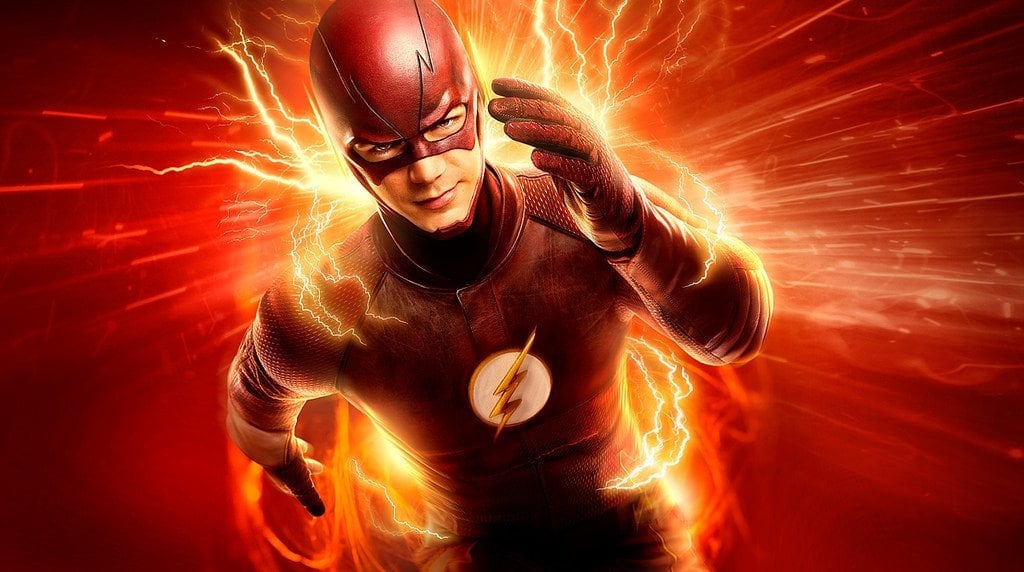
Barry Allen, aka the Flash, a pop DC superhero. (Photo Credit : The Flash (2014 TV series) / Bonanza Productions)
Barry Allen – a police scientist – was continuing by the chemic storeroom of the CCPD when a lightning bolt hitting the room. It smashed all the containers in the room, knocked him off his anxiety and passed through his torso as he was doused by a random (and insanely fortunate) combination of chemicals.
After the incident, Allen noticed that he had suddenly become incredibly fast – he could outrun cars, catch bullets and walk on water (forth with plenty of other cool stuff). He then donned a colorful outfit and started to fight crime as "The Flash". (Note: this is how DC comics described the nativity of the Flash in their Flash comics series).
Since he is incredibly swift, the Flash is often seen (in the comics) not merely outrunning vehicles, but also running up the sides of tall buildings!
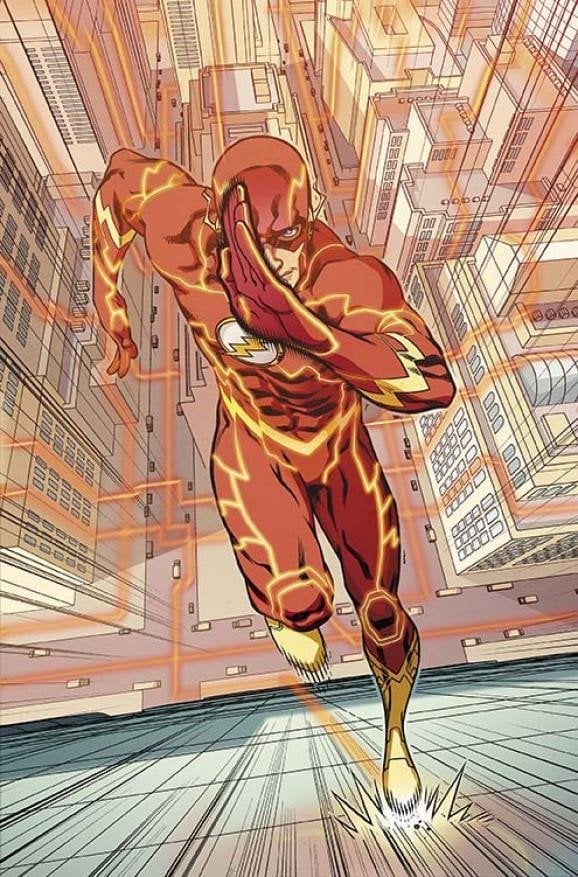
The Wink running up the side of a building in the comic volume Vol. iv #28 edition of Flash comics written past Brian Buccellato.(Photo Credit : THE FLASH comic volume / DC Comics)
Now, we know that this is a superhero nosotros are talking about and all of this is pure fantasy, but for the sake of being a true nerd, is the aforementioned feat really possible? Let me tell y'all that a lot of stuff that they show in superhero comics and movies is scientifically accurate and really possible in existent life, should one be endowed by such superpowers in the first place.
So, hypothetically speaking, if someone could run equally fast as The Flash, would they actually be able to scale buildings by running up their sides? How scientifically accurate is the whole matter?
Recommended Video for you lot:
Newton'southward third law of motion
Any discussion regarding the physics of running and jumping invariably involves Newton'due south third law of motility. It's a very pop one, and says that for every action, there is an equal and opposite reaction.
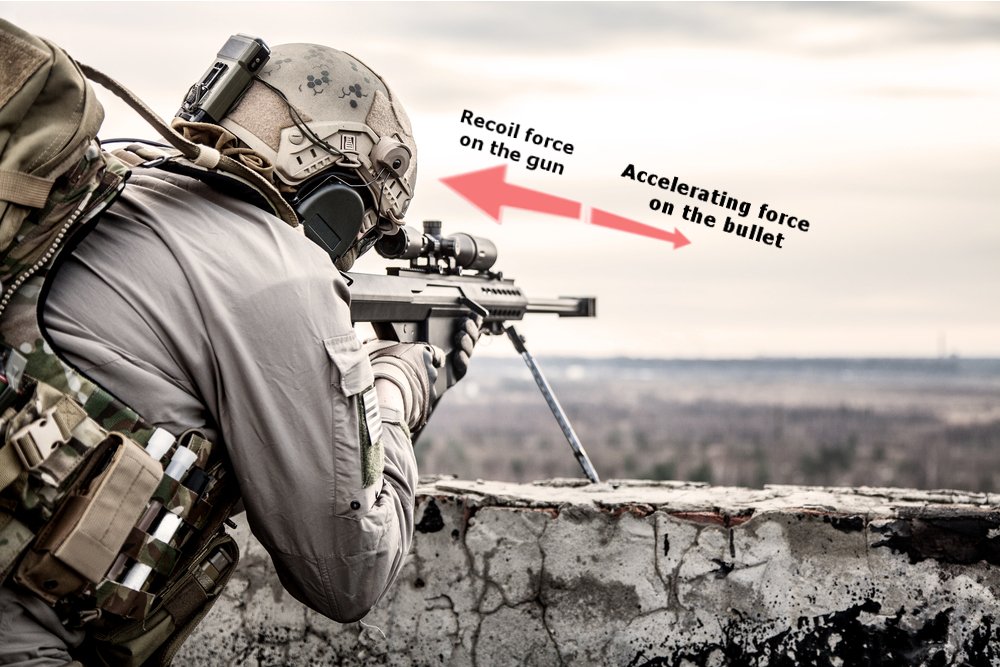
The recoil of a gun is a classic instance of the third police at work. (Photo Credit: Oleg Zabielin / Shutterstock)
A straight implication of this constabulary is that forces come in pairs. When you run, your feet utilise force to the ground in the horizontal direction. In response, the footing as well exerts an equal and opposite force back to your anxiety, parallel to the basis's surface, that compensates the 'back-directed' force past your feet. The issue of this is that you lot are able to motion farther with each subsequent footstep.
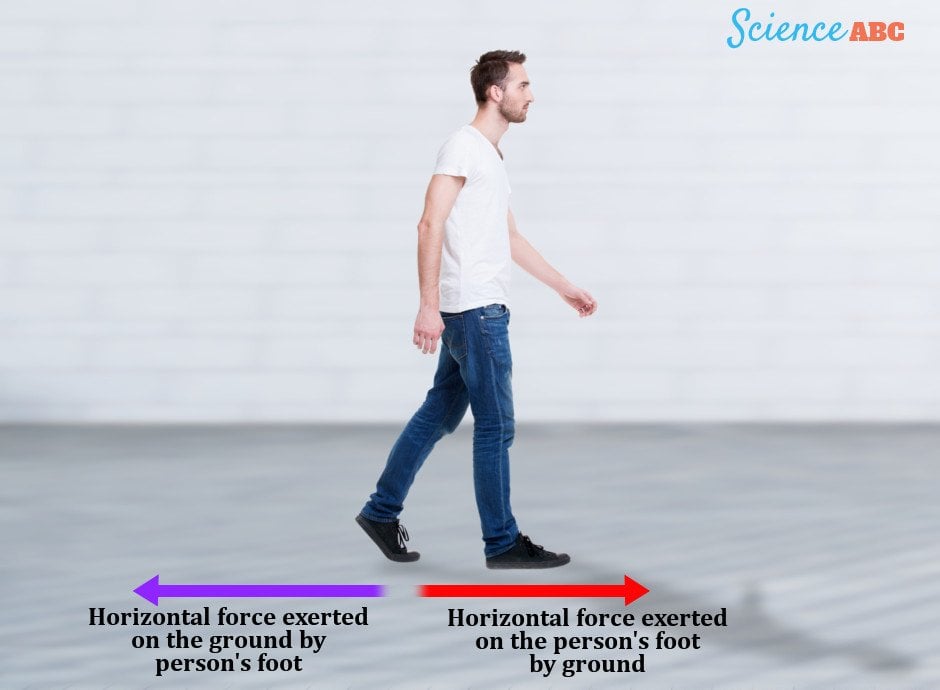
For every action, there'south an equal and reverse reaction.
Note that the origin of this strength (i.e., the ane applied by the basis in the parallel direction) is friction. It'south ane of the most ubiquitous kinds of force and is at play nearly all the time, every twenty-four hours, which is why we tend to take it for granted. Imagine what would it be like to walk on a surface covered with a uniform layer of oil; that's what it would exist like to walk if there was no such thing equally friction.
Frictional force, or but friction, is proportional simply to the component of the weight that's perpendicular to the ground. Also, it is straight proportional to the mass of the object. That'southward why information technology's easier to push button/pull a calorie-free object compared to a heavy 1. Similarly, if an object is kept on a ramp that is at a steep angle with the ground, the former would definitely slide downwards the ramp, no matter how heavy it is. This is because, afterwards a certain point, frictional force becomes also small to counteract the downwardly gravitational pull.
The act of running up the side of buildings
As the Flash runs upwardly the side of a edifice, in that location's no component of his weight perpendicular to the surface he is running on (i.e., the building's surface), which is why in that location should be no friction betwixt his feet and the edifice's surface. As a consequence, he should not be able to sew together the side of the building, at to the lowest degree in the traditional manner.
That'due south why Captain Cold – a supervillain in the Flash comics – uses a 'freeze ray' gun to ice upward any surface, making it impossible for the Flash to run on it, thereby making his super-speed useless (at to the lowest degree to some extent).
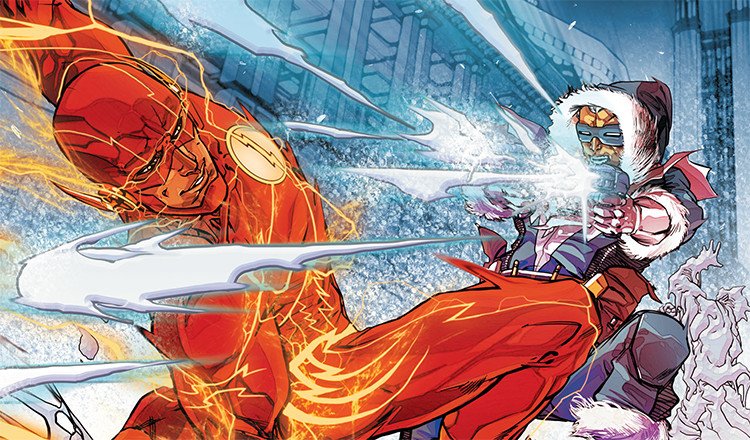
Helm Common cold has a 'freeze ray' gun that he uses to freeze surfaces, depriving the Wink of the friction he needs in guild to be able to run. Needless to say, the gun is pretty constructive. (Photograph Credit : The Flash #14 – "Rogues Reloaded" / DC Comics)
The Wink can, even so, move his feet back and forth against the surface of the building, which would give the impression that he is, in fact, running. What he would really be doing here is travelling a altitude equivalent to the height of the edifice in the time between consecutive steps. That seems totally impractical, doesn't it?
Information technology seems impractical because information technology is indeed impossible for a normal fella with regular abilities. But non for the Flash.
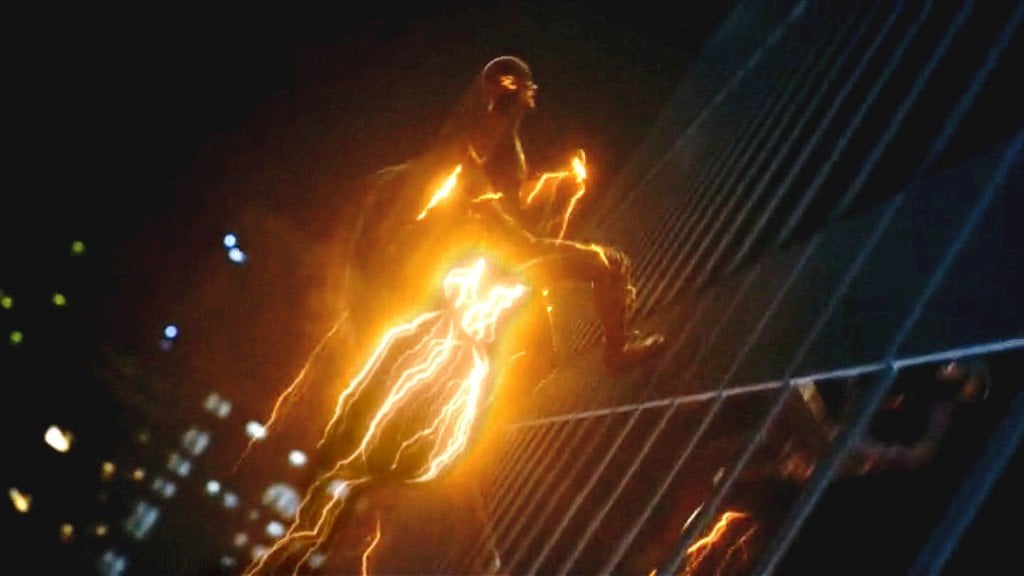
The Flash running up a building (Photo Credit : The Wink (2014 Television receiver series) / Bonanza Productions)
When the Flash runs on a plain surface, he pushes on the ground at an angle with the surface of the road; consequently, the force that the road exerts back on him is besides at an angle with the surface. The net result is that he accelerates in both the horizontal and vertical direction. The larger the horizontal velocity, the further he advances before gravity overcomes the (relatively) small vertical velocity and pulls him dorsum to the ground, making him have some other footstep to keep moving ahead.

Very fast runners can have both their feet off the footing between steps. (Photograph Credit : Flickr)
People who run actually fast (including the Flash) can have both their feet airborne between steps, cheers to their higher-than-normal vertical velocity. If the Wink bounces about 2 cm vertically with each step, then he remains airborne for around one-eighth of a second. Fifty-fifty if the Flash runs at a speed of 3,600 mph, he could travel around 660 anxiety before he had to take some other step. And that's an insanely underestimated assumption near his speed; according to the comics, the Wink travels faster than calorie-free itself!
Anyone can calibration buildings just past running up their sides, provided they're fast enough. Since the Flash is faster than the fastest matter nosotros humans know of (i.e., light), he can undoubtedly stitch the side of a skyscraper. The physics checks out on this one.
Kudos, DC comics!
Notation: This commodity is inspired by "The Physics of Superheroes" – a volume authored past James Kakalios – a University of Minnesota professor who turned to comics and superheroes for his Physics lectures!
Suggested Reading
-
The Physics of Superheroes

Help united states of america brand this article improve

Source: https://www.scienceabc.com/humans/movies/can-the-flash-really-run-up-the-side-of-buildings.html
Posted by: burkswhispectilly.blogspot.com
0 Response to "How To Draw Flash Running Up A Building"
Post a Comment